
Kishmish, Black Kishmish and Munakka: What's the Difference?
All three are dried grapes, but they come from different grapes and are dried differently. How to tell them apart, and which to use where.

NutsAndCrafts
18 October 20263 min read
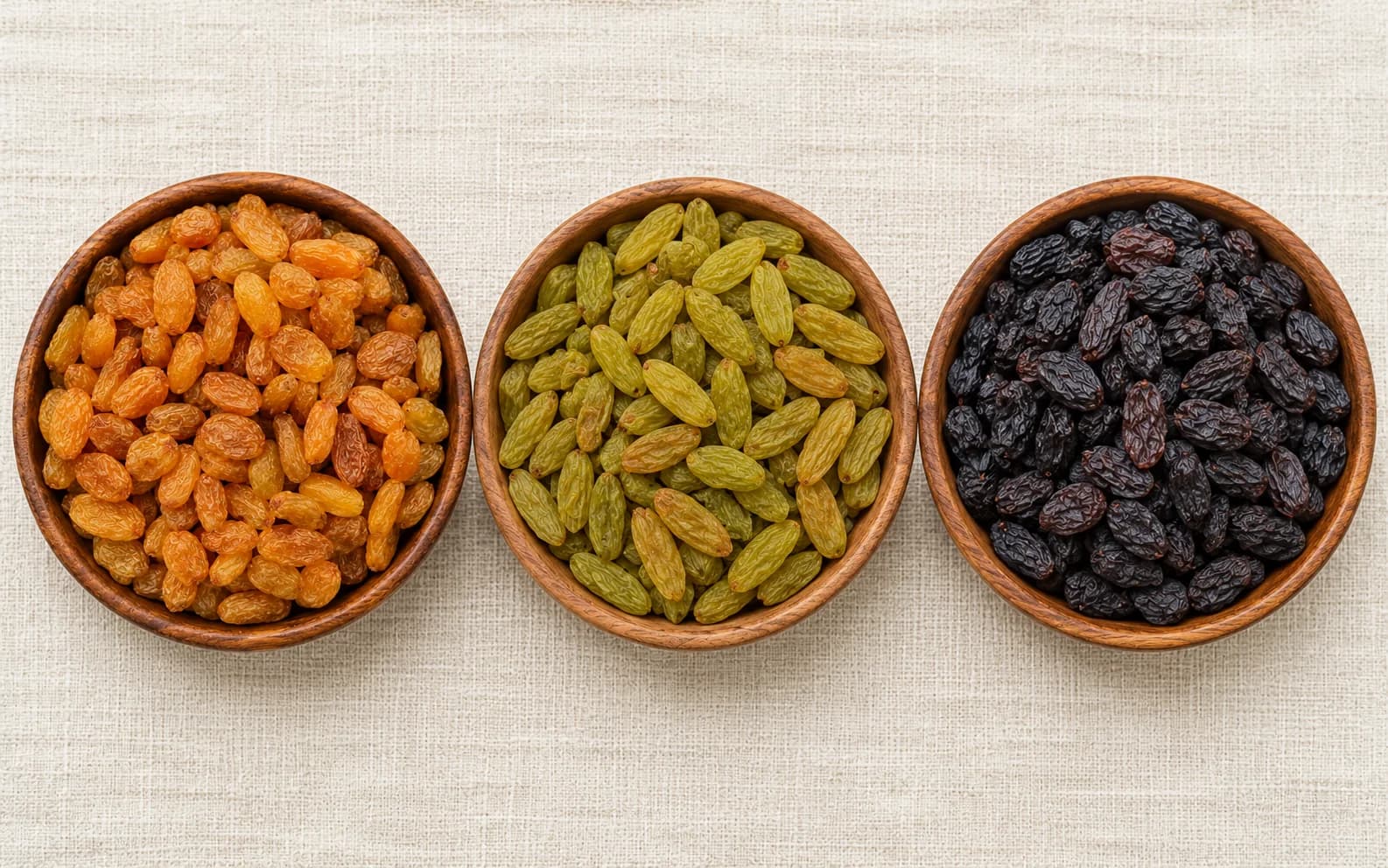
Walk into any dry fruit shop in India and you'll find at least three or four kinds of raisins, each with its own name. They are all dried grapes. The differences come down to which grape was used and how it was dried, and those differences really do change how they taste.
The main kinds
Name | Made from | Looks like | Taste | Seeds |
|---|---|---|---|---|
Kishmish (green) | Seedless green grapes, dried in shade | Slender, green to light brown | Sweet with a little tang | No |
Golden raisins | Green grapes, usually treated with sulphur and dried quickly | Plump, bright golden | Sweet and fruity | No |
Black kishmish | Seedless black grapes | Small, dark, almost black | Deeper, richer, less tangy | No |
Munakka | Large grapes, often with seeds | Big, dark brown, sticky | Very sweet, almost like dates | Usually yes |
Kishmish
This is the everyday raisin in most Indian kitchens. Green kishmish is dried slowly in the shade, which keeps its green-gold colour without needing treatment. It's what goes into kheer, halwa, pulav and most sweets.
Golden raisins
These are often sold as kishmish too, but their bright, even gold usually comes from sulphur dioxide, which stops them browning as they dry. They're plump and pretty in desserts. If you're sensitive to sulphites, check the label.
Black kishmish
Made from black grapes, these are smaller and darker, with a richer taste that some people describe as closer to wine or jam. Many families soak a handful overnight and eat them in the morning, the same way they soak almonds.
Munakka
Munakka are the big, sticky, dark raisins, often with seeds still inside. They're sweeter than the others and very soft. In many homes they're kept for winter, or added to warm milk. Because of the seeds, chew them carefully, or slit them and remove the seeds before cooking.
Which to use where
- Kheer, halwa, sheer khurma: green kishmish. It holds its shape and adds a gentle sweetness.
- Cakes and baking: golden raisins look best, but any will do.
- Pulav and biryani: green kishmish, fried in ghee until it puffs up.
- Eating soaked in the morning: black kishmish or munakka.
- Trail mix and snack boxes: a mix of green and black looks good and tastes better.
Soaking raisins
Rinse a handful, cover with water and leave overnight. They swell, soften and turn juicier. You can drink the water too, since some of the sweetness ends up in it.
Storing them
Raisins keep well in an airtight jar in a cool cupboard for several months. In summer, the fridge stops them from clumping and drying out. If they've hardened, soak them for ten minutes in warm water before using.
We sell [raisins (kishmish)](/products/raisins-kishmish) and [black kishmish](/products/black-kishmish). Both are seedless, and both go into our kitchen as often as the almonds do.