
How to Store Saffron So It Stays Red and Fragrant
Light, heat, air and moisture are what fade saffron. Where to keep a jar, whether the fridge helps, and how to tell when it has gone past its best.

NutsAndCrafts
12 October 20263 min read
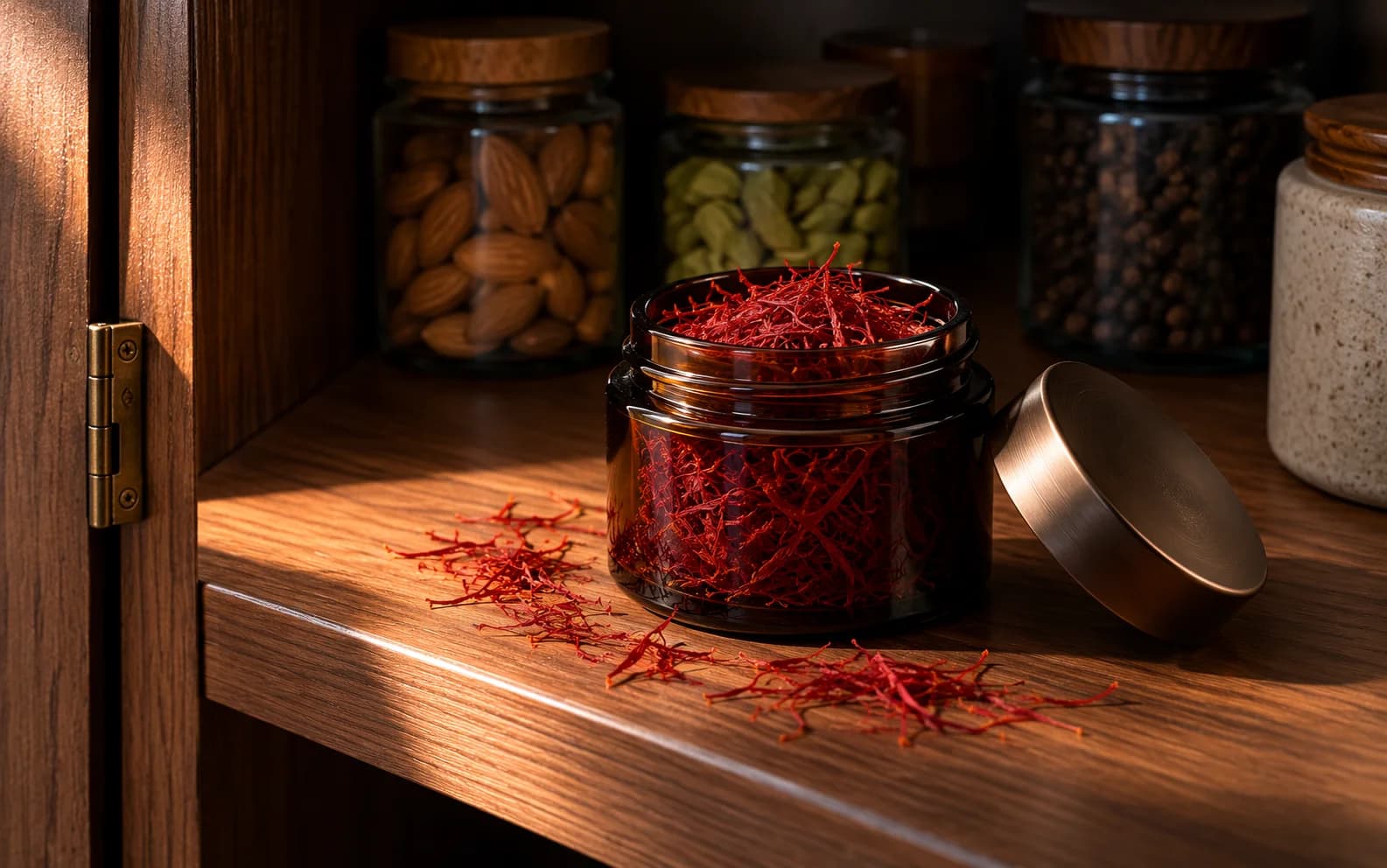
Saffron doesn't spoil the way milk or bread does. It fades. The colour gets weaker, the smell gets quieter, and one day you notice your kesar doodh has gone pale yellow. How quickly that happens depends almost entirely on where the jar lives.
The four things saffron doesn't like
Light. This is the big one. Sunlight and even bright kitchen light break down the compound that gives saffron its colour. A clear jar on a sunny windowsill can lose a noticeable amount of colour in a few weeks.
Heat. Warmth speeds up everything that makes saffron fade. A shelf above the stove or next to the oven is the worst place for it.
Air. Every time you open the jar, fresh air gets in, and the aroma slowly escapes. That's why a tight lid matters more than a pretty one.
Moisture. Damp saffron clumps, and in humid weather it can even grow mould. Never put a wet spoon in the jar.
Where to keep it
- In an airtight container, ideally glass or metal with a tight lid.
- In a dark place: a drawer, a cupboard away from the stove, or inside a small tin or box if your jar is clear.
- At room temperature, somewhere that doesn't get hot.
That is genuinely all most kitchens need.
Should it go in the fridge?
Usually, no. The problem isn't the cold. It is what happens when you take the jar out. Cold glass in a warm, humid kitchen collects condensation, and that moisture gets onto the threads.
If you live somewhere very hot and humid and don't have a cool cupboard, the fridge can help. In that case:
- Seal the jar tightly, and put it inside a second airtight box.
- When you need some, take the box out and let it come to room temperature before you open it, so no water forms inside.
- Put it back quickly.
The freezer works on the same rules for long storage, but there's rarely any need for it in a home kitchen.
How long does it last?
Kept well, saffron is at its best for about a year and stays perfectly usable for two or three. After that, it is still safe, but you'll need more threads to get the same result.
A simple habit helps: write the month you opened the jar on the lid.
How to tell if it has faded
Check | Fresh | Faded |
|---|---|---|
Colour of the threads | Deep red, a little glossy | Dull, brownish-red |
Smell when you open the jar | Strong, sweet, slightly like hay and honey | Faint, or almost nothing |
Colour in warm water after 10 minutes | Rich golden-orange | Pale yellow |
Feel | Dry and springy | Brittle and crumbly, or soft and clumped |
If it has faded a little, don't throw it out. Use a few extra threads and soak them longer. If it smells musty or has clumped with damp, that's when it should go.
Buy what you'll use
The best way to have fragrant saffron is to finish it. If you use saffron a few times a month, a one or two gram jar used within the year will taste better than a big jar that sits for three. Our [Mongra saffron](/products/pampore-saffron) comes in small jars for exactly that reason, and [this guide](/blog/how-to-use-saffron-in-cooking) will help you get the most out of every thread.