🌿 Free delivery on orders above ₹1,499 · Use WELCOME5 for 5% off

Premium Grade
Pampore, Kashmir
BestsellerSaffron
Kashmiri Mongra Saffron (Kesar)
All-red Mongra from Pampore, in long or short thread — the most colour, aroma and flavour you can get from a gram
No reviews yet — be the firstSelect Weight
In stock
1
₹449/ 1g
₹449/g · incl. GST
- Variety: Mongra
- Grown in Pampore, Kashmir, India
- Harvested October – November
- Shelf life 24 months, sealed
Free Delivery
On orders over ₹1,499
Easy Returns
Within 7 days of delivery
Cash on Delivery
Pay when it arrives
kesarmongrasaffron
About
The story
Mongra is saffron at its most concentrated. Each thread is the deep-red tip of the crocus stigma, trimmed by hand so none of the pale yellow style comes with it — nothing in the jar that does not colour, scent or flavour your food. It comes in two grades from the same harvest: Long Thread, the long unbroken threads picked out by hand, and Short Thread, the same saffron in shorter lengths at a lower price. Both are grown in the saffron fields of Pampore, where it takes around 150 flowers, picked at first light, to make a single gram.
What Mongra means
Kashmir names its saffron by how much of the flower is kept. Mongra is the red tip alone. Lachha keeps the whole stigma with its yellow tail still on, and Guchhi is Lachha tied into little bundles. The cut is one question; the lab result is another — ISO 3632 measures colour, bitterness and aroma, and Grade I is its top band. A jar worth buying should be able to tell you both — ask any seller for a lab report.
Check it yourself
Drop four or five threads into a glass of warm water. Real saffron lets go of its colour slowly — a golden yellow that spreads over ten to fifteen minutes — while the threads stay red and whole, often opening into a small trumpet at one end. Dyed saffron turns the water red within moments.
How to use it
- Always bloom it first: crush 8–10 threads into two tablespoons of warm milk or water and leave them for ten to fifteen minutes before they go into the dish.
- Rice and sweets: biryani, pulao, zarda, kheer, phirni, shrikhand and badam milk.
- Kahwa: three or four threads a cup, with the green tea and whole spices.
- Kesar milk: a small pinch in warm milk at night.
- Less is more — too much saffron tastes bitter and metallic.
How long a jar lasts
A gram holds roughly 450 threads: about 45 dishes, or two to three months in a kitchen that uses saffron every week. The 5 g and 10 g jars suit everyday cooking and gifting, and since good saffron keeps for years in a sealed jar, the larger size is not a gamble.
- Serving
- 8–10 threads
- Shelf life
- 24 months
Storage & usage
Keep the jar sealed in a cool, dark cupboard — not the fridge, where every opening lets damp in. Stored like this it holds its colour and aroma for two years and more.
What it brings
01
Colour — crocin
The carotenoid behind saffron's golden yellow; a few threads colour a whole pot of rice.
02
Aroma — safranal
The honey-and-hay scent that rises when bloomed threads meet warm milk or rice.
03
Flavour — picrocrocin
The gentle bitterness that gives saffron its depth, and the reason a pinch is enough.
04
Natural antioxidants
Crocin and safranal are carotenoid compounds; saffron is enjoyed as a food, not as a medicine.
Sizes & prices
What each size costs, per g
The same Kashmiri Mongra Saffron (Kesar) in every pack — only the quantity changes. The per-g column is the honest comparison, and the one worth making against any other seller.
Prices as of 8 November 2026.
| Pack | Price | Per g |
|---|---|---|
| 1g | ₹449 | ₹449/g |
| 2g | ₹849 | ₹425/g |
| 5g | ₹1,999 | ₹400/gBest value |
Reviews of Kashmiri Mongra Saffron (Kesar)
0.0
Based on 0 reviews
Most recent
No reviews yet
Reviews come from customers who have received this product.
Buying guide
Saffron grades, and the ones we leave out
Two systems get mixed up. The Kashmiri names say which part of the flower is in the jar; ISO 3632 is a lab standard for colour, bitterness and aroma. A good jar answers both. Labels like 'A++' answer neither.
Mongra
We sell thisThe red stigma tip alone, the yellow style trimmed off by hand. The most colour and aroma per gram — what we sell.
Lachha
The whole stigma, yellow tail still attached, dried as it is. Real saffron, but less colour for its weight.
Guchhi
Lachha threads tied into small bundles — guchha means a bunch. The same grade, sold by the bundle.
Zarda
The yellow tails left over once Mongra is cut. Little colour or flavour; often used to bulk out cheap saffron.
Choora
The broken bits and dust left after sorting. Cheap, and impossible to judge by eye.
Check it yourself
Test it at home
Three checks that need a glass of water, a white plate and ten minutes. Try them on ours, and on anything else you buy.
Test 1
The water test
Drop three or four threads into a glass of lukewarm water and leave it for ten minutes.
Real: Gold spreads out slowly from each thread, and the threads stay red.
Fake: Red or orange colour bleeds out at once, and the threads go pale.
Test 2
Look at the tip
Put a thread on a white plate and look at one end closely.
Real: It widens into a small trumpet, often with a frilly edge.
Fake: The same width from end to end, or flat like a ribbon.
Test 3
Taste one thread
Put a single thread on your tongue for a few seconds.
Real: Slightly bitter, with a smell like honey and hay, and your tongue turns yellow.
Fake: Sweet, or no taste at all, and your tongue turns red.
Recipes
What to make with it
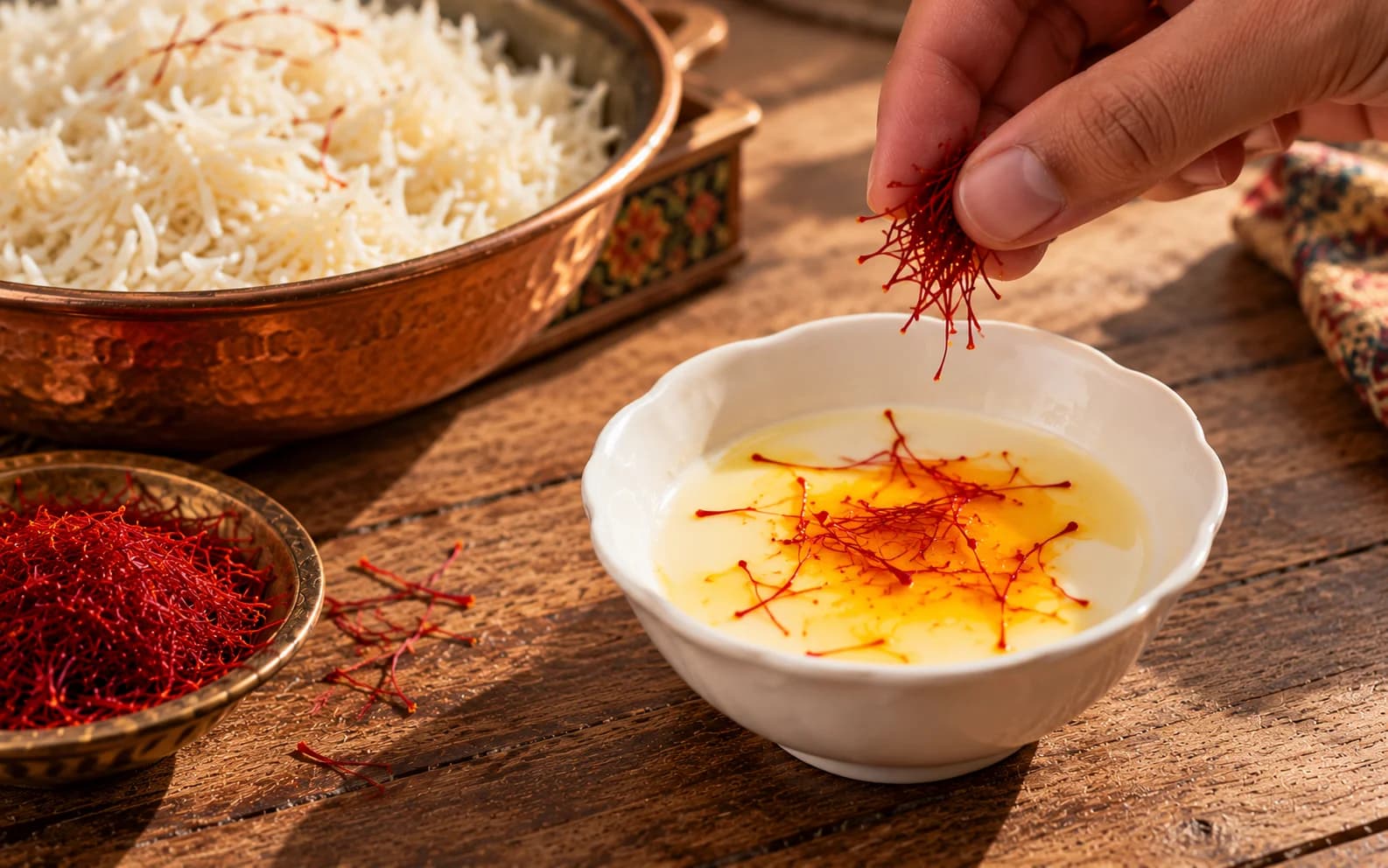
How to Use Saffron Without Wasting It
A gram of saffron goes a long way if you treat it right. How many threads to use, how to bring out the colour, and the mistakes that throw it away.
3 min read →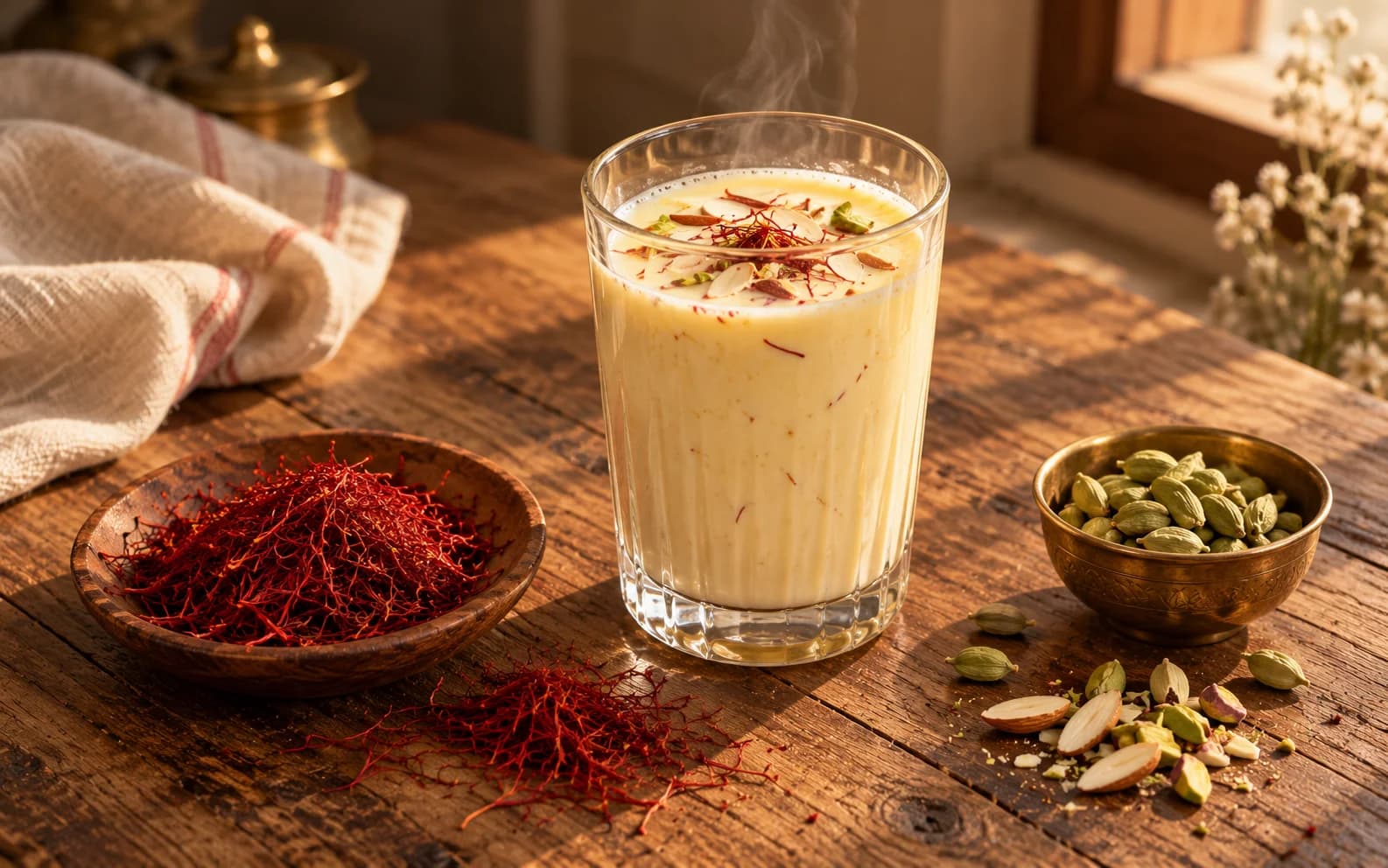
Kesar Doodh: The Saffron Milk We Grew Up On
Warm milk, a few threads of saffron, a little cardamom and some crushed almonds. The recipe, the small things that make it better, and a few ways to change it.
3 min read →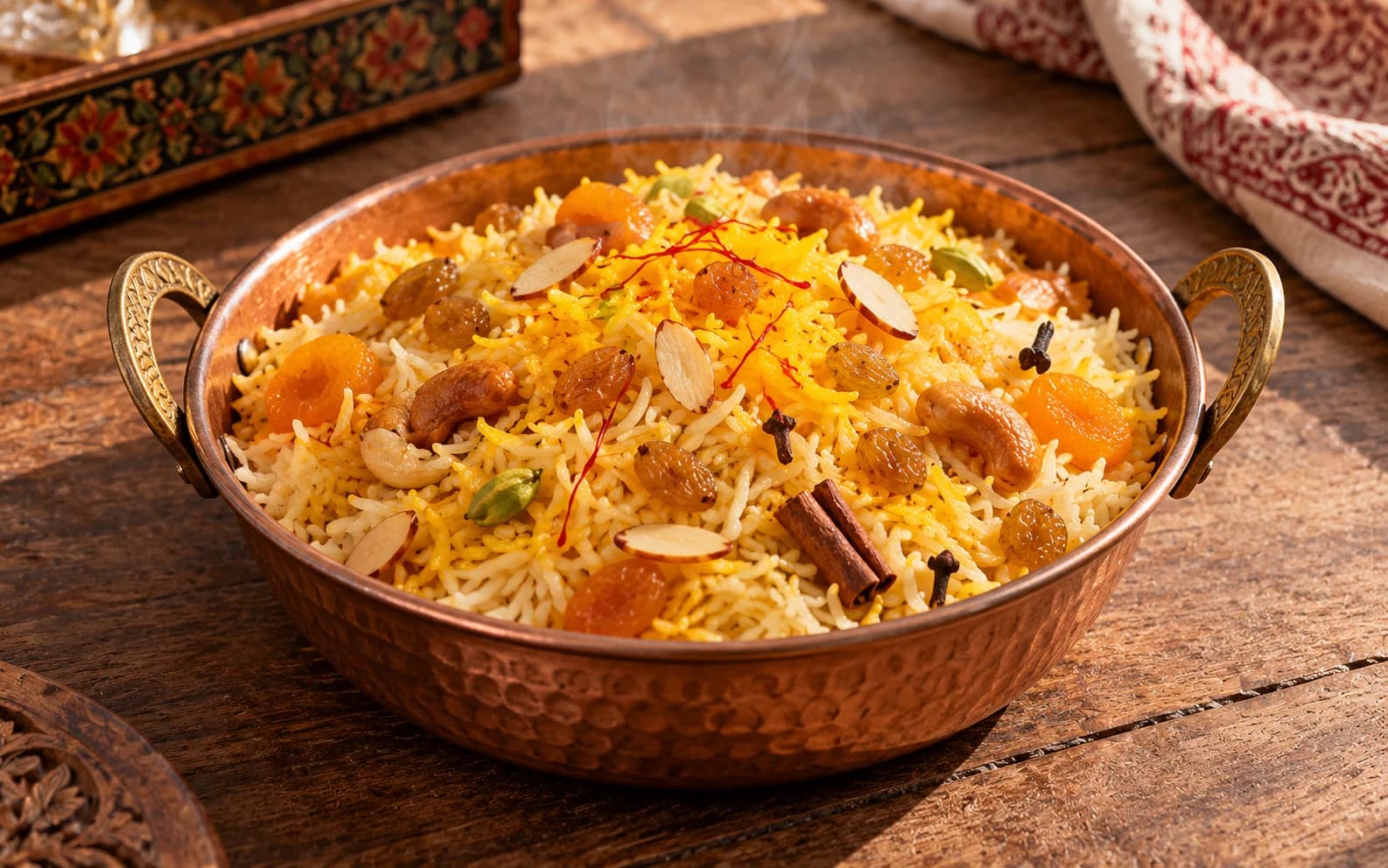
Modur Pulav: Kashmir's Sweet Saffron Rice
Golden rice cooked in ghee with saffron, sugar, whole spices and a handful of dry fruits. A Kashmiri wedding dish you can make on a weekday.
3 min read →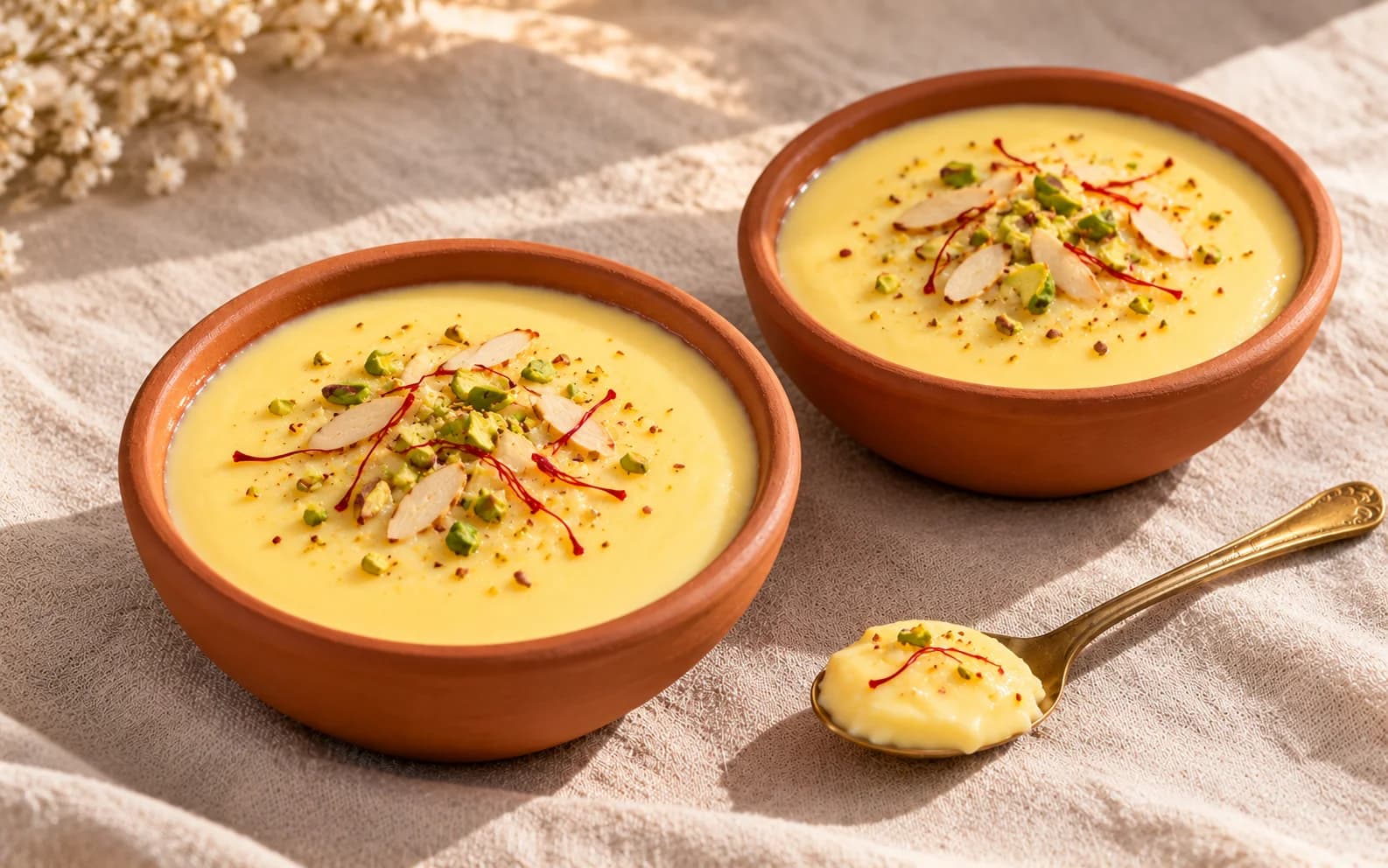
Kesar Phirni: Kashmir's Saffron Semolina Pudding
Milk, fine suji, saffron and cardamom, set cold in small clay pots. The Kashmiri way, and why the texture depends on how slowly the suji goes in.
3 min read →
Questions, answered
About Kashmiri Mongra Saffron (Kesar)
Is this genuine Kashmiri Mongra saffron?
Yes — Mongra grown in Pampore: the red stigma tips only, with the yellow style trimmed away by hand. Mongra is one of the three Kashmiri saffron types, alongside Lachha and Guchhi, and the only one made of the red tip alone. Check it yourself with the water test below.
How can I test saffron at home?
Use the water test. Put four or five threads in warm (not hot) water. Real saffron releases a golden-yellow colour slowly over ten to fifteen minutes and the threads stay red and whole. Dyed or mixed saffron stains the water red or orange almost at once, and its threads can break apart.
What is ISO 3632 Grade I?
ISO 3632 is the international laboratory standard for saffron. It measures colour (crocin), bitterness (picrocrocin) and aroma (safranal) and sorts saffron into Grade I, II or III. Grade I is the top band. It is separate from the Kashmiri names, which describe the cut rather than the chemistry.
What do labels like 'Grade A++' mean?
Nothing official. 'A++', 'A1' or 'tested on 8 parameters' belong to no standard. What you can check is the cut (Mongra, Lachha or Guchhi) and an ISO 3632 grade from a lab report — ask any seller for both.
Is Mongra better than Lachha?
For colour and aroma per gram, yes: Lachha keeps the yellow style, which adds weight but very little flavour. Lachha is still real saffron and a fair buy at a fair price — it just takes more of it to do the same job.
How much saffron should I use?
Eight to ten threads flavour a dish for four. Bloom them first in two tablespoons of warm milk or water for ten to fifteen minutes. Using more does not make a dish better — too much tastes bitter and metallic.
How long will a 1 g or 5 g jar last?
A gram is roughly 450 threads, so about 45 dishes — two to three months for a home that cooks with saffron weekly. A 5 g jar lasts most kitchens the best part of a year, and sealed saffron keeps its colour and aroma for two years and more.
Can I have saffron during pregnancy?
A small pinch in warm milk is a long-standing custom in many Indian homes, usually from the second trimester. Keep it to a few threads; large amounts are not advised. Saffron is a food here, not a medicine — please ask your own doctor first, especially in a high-risk pregnancy.
How should I store saffron?
Sealed, in a cool, dark cupboard, away from the stove. Avoid the fridge: each time the cold jar is opened, moisture settles on the threads. Use a dry spoon or your fingers, never a wet one.
Long Thread or Short Thread — which should I buy?
They are the same all-red Mongra from the same harvest; only the thread length differs. In biryani, kheer, kahwa or warm milk you will not taste a difference, so Short Thread is the better value for everyday cooking. Long Thread is worth it where the threads are seen — gifting, a garnish, or a table set for guests.
Why is the price per gram the same in every pack?
Every pack holds the same Mongra from the same harvest, packed by weight, so a larger pack saves you reordering rather than quality. Compare the per-gram figure, not the pack price, against any other seller.
Why does good Kashmiri saffron cost what it does?
Around 150 flowers make one gram, every one picked by hand at dawn during a bloom that lasts about two weeks, and every stigma trimmed by hand. Very cheap 'Kashmiri Mongra' is usually Lachha, a blend, or imported saffron repacked — the water test and a lab report tell you which.
Before you order
Delivery, payment and returns
- Dispatch
- Orders placed before 2 PM IST leave the same day; later orders, the next working day.
- Delivery
- Jammu & Kashmir: 2–3 days, ₹40. Rest of India: 5–7 days, ₹79. Free on orders over ₹1,499.
- Payment
- Cash on delivery — pay when it arrives.
- Returns
- Within 7 days of delivery. How returns work
Not sure? Ask us before you buy
Which pack to pick, how to use it, how long it keeps. Message us on WhatsApp and we’ll answer.
From the journal
Further reading
How to Tell Real Kashmiri Saffron From Fake: 7 Home Tests That Work
Most fake saffron gives itself away in a glass of water. Here are seven checks you can do in your own kitchen, what each one proves, and the one question only a lab can answer.
10 min read →Kashmiri vs Iranian Saffron: Colour, Aroma, Grades and Price Compared
Same flower, different soil. How Kashmiri and Iranian saffron compare on colour, aroma, thread, grading and price, and which one makes sense for what you cook.
7 min read →Saffron Price Per Gram in 2026: What You Should Really Pay
Saffron is sold in every pack size imaginable, which makes prices hard to compare. Here is how to work out the real cost, what moves it, and the prices that should make you walk away.
7 min read →Saffron in Pregnancy: Benefits, Safe Amounts and When to Avoid It
Kesar milk is a pregnancy tradition in many Indian homes. Here is what is actually known about saffron in pregnancy, what a sensible amount looks like, and the myths worth letting go of.
6 min read →


