
How to Use Saffron Without Wasting It
A gram of saffron goes a long way if you treat it right. How many threads to use, how to bring out the colour, and the mistakes that throw it away.

NutsAndCrafts
4 October 20263 min read
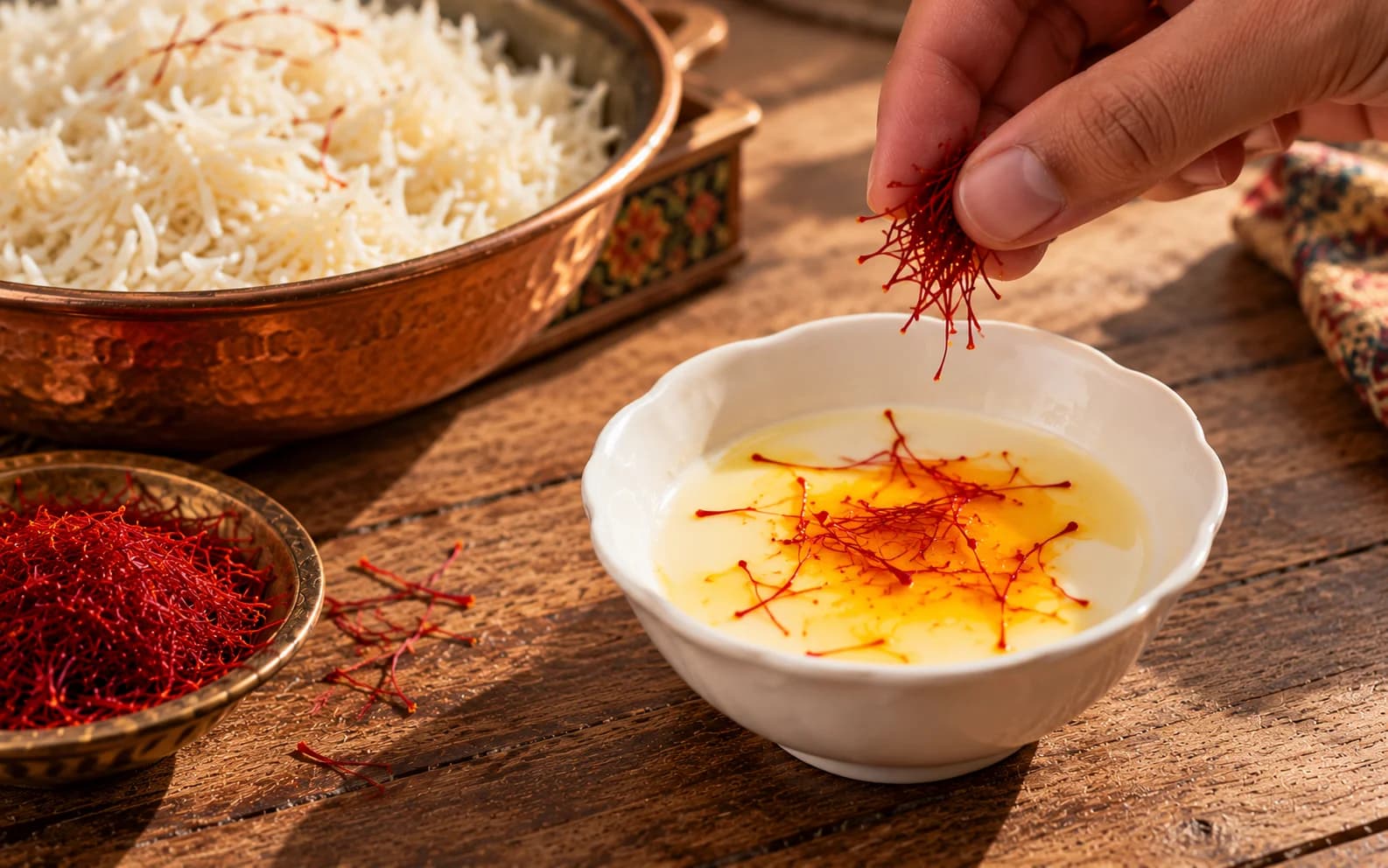
Most people who say saffron "didn't do much" in their biryani made one of two mistakes. They used too little and threw it in dry, or they used too much and threw it in dry. The fix for both is the same, and it costs nothing.
Soak it first
Saffron threads are dry and tightly packed. Dropped straight into a pot, they release some of their colour, but slowly and unevenly. Soaking them first gets the colour, taste and smell out into a liquid you can spread through the whole dish.
- Take your threads and crumble them lightly between your fingers. You don't need to grind them into dust.
- Put them in two or three tablespoons of warm milk or warm water. Warm, not boiling.
- Leave them for fifteen to twenty minutes. The liquid will turn a deep orange-gold.
- Add the liquid and the threads together to your dish.
If you are in a hurry, ten minutes still works. If you have time, some cooks soak it for an hour, or overnight in the fridge, for the deepest colour.
How much to use
A gram of saffron holds somewhere around four to five hundred threads. That is more than people expect, and it is why a gram lasts a home kitchen a long time.
Dish | Roughly how much |
|---|---|
A glass of kesar doodh | 4 to 6 threads |
A cup of kahwa | 2 to 3 threads |
Phirni or kheer for four | A pinch, around 15 to 20 threads |
Biryani or pulav for four to six | 20 to 30 threads |
Sweets like barfi or ladoo, one batch | 15 to 25 threads |
Start at the lower end. Saffron that is too strong tastes bitter and slightly medicinal, and you can't take it back out.
When to add it
Saffron's smell is delicate and doesn't survive long, hard cooking. So:
- In rice, sprinkle the soaked saffron over the top layer just before you seal the pot for dum. It steams through without being fried.
- In milk and sweets, add it near the end, once the heat is low.
- In curries, stir it in during the last few minutes.
- Don't fry it in hot oil or ghee. It scorches and turns bitter almost at once.
Mistakes worth avoiding
Grinding it to powder ahead of time. Ground saffron loses its smell quickly. Crumble it just before you soak it.
Using a wooden spoon to stir the soaking liquid. It is a small thing, but wood soaks up some of the colour. A steel spoon gives it all back to the dish.
Storing it next to the stove. Heat and light fade saffron faster than anything else. Our note on [storing saffron](/blog/how-to-store-saffron) explains where it should live.
Buying more than you'll use in a year. Saffron keeps well, but it is at its best in the first year. A smaller jar used up is better value than a bigger one that goes flat.
Where to start
If you have a new jar and want to see what it can do, make a glass of [kesar doodh](/blog/kesar-doodh-recipe). It is the simplest test there is. Four or five threads, warm milk, ten minutes, and you will know exactly how good your saffron is.