
Kashmiri Red Chilli: Why It's About Colour, Not Heat
Kashmiri chilli gives food a deep red colour with only a gentle warmth. How to cook with it, how to bloom it in oil without burning it, and a simple check for added colour.

NutsAndCrafts
21 October 20263 min read
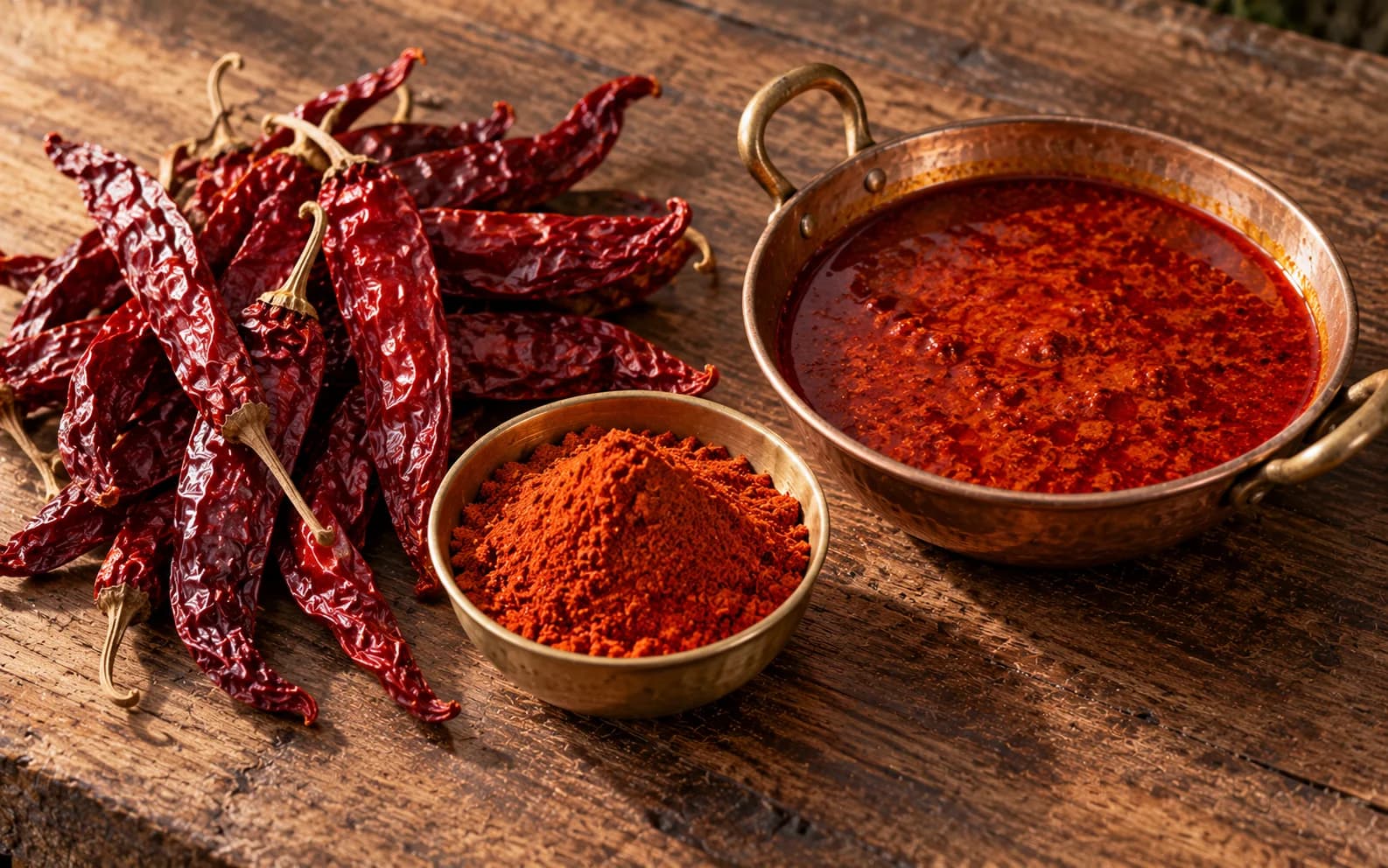
If you've ever eaten a rogan josh that was deep red but barely spicy, you've tasted the point of Kashmiri chilli. It isn't there to make your eyes water. It's there to colour the dish and give it a soft, rounded warmth.
What makes it different
Most chillies are bred for heat. Kashmiri chillies are grown for colour. They're long, wrinkled and dark red when dried, and when ground they give a powder that is strongly coloured but mild.
Kashmiri chilli | Ordinary red chilli powder | |
|---|---|---|
Colour in food | Deep, bright red | Brownish red |
Heat | Mild to medium | Medium to very hot |
Taste | Fruity, slightly smoky | Sharper, more bitter |
Best for | Colour, gravies, marinades | Heat |
That's why many cooks keep both. Kashmiri chilli for the colour, a little ordinary chilli for the bite.
How to cook with it
Bloom it in oil, gently. The colour in chilli dissolves in fat, not water. Add the powder to warm oil or ghee for a few seconds before the next ingredient goes in. You'll see the oil turn red.
Keep the heat low when you do it. Chilli powder burns in seconds in very hot oil, and burnt chilli turns bitter and brown. If your oil is very hot, take the pan off the flame first, add the powder, stir, then return it.
Or make a paste. Mix the powder with a little water or yoghurt first, then add the paste to the pan. It's much harder to burn this way.
Where it shines
- Rogan josh and other Kashmiri gravies, where colour is everything.
- Tandoori marinades, mixed with yoghurt, for that red finish.
- Tadka for dal, a pinch in hot ghee at the very end.
- Eggs and paneer, sprinkled on for colour.
- Chutneys and pickles.
A simple check for added colour
Chilli powder is sometimes sold with added dye to make it look redder. You can do a quick check at home:
- Fill a clear glass with water.
- Sprinkle a small pinch of chilli powder on the surface. Don't stir.
- Watch it for a minute.
Pure chilli powder floats for a while, then slowly sinks without much colour leaking out. If you see bright red streaks running down from the powder into the water, something has probably been added for colour. If there's gritty sediment at the bottom that feels sandy when you rub it, that's a sign of filler.
It's not a lab test, but it catches the obvious cases.
Storing it
Light and heat fade chilli powder quickly, and the colour goes first. Keep it in an airtight jar in a dark cupboard, away from the stove, and try to use it within six months to a year.
Our [Kashmiri red chilli powder](/products/kashmiri-chilli-powder) is ground from chillies grown on our own fields, with nothing added.