
Raw Honey: Why It Sets, How to Warm It, and Which Purity Tests to Ignore
Crystallised honey isn't spoiled, and most home 'purity tests' don't prove anything. What raw honey actually is, how to handle it, and what to look for on the label.

NutsAndCrafts
19 October 20264 min read
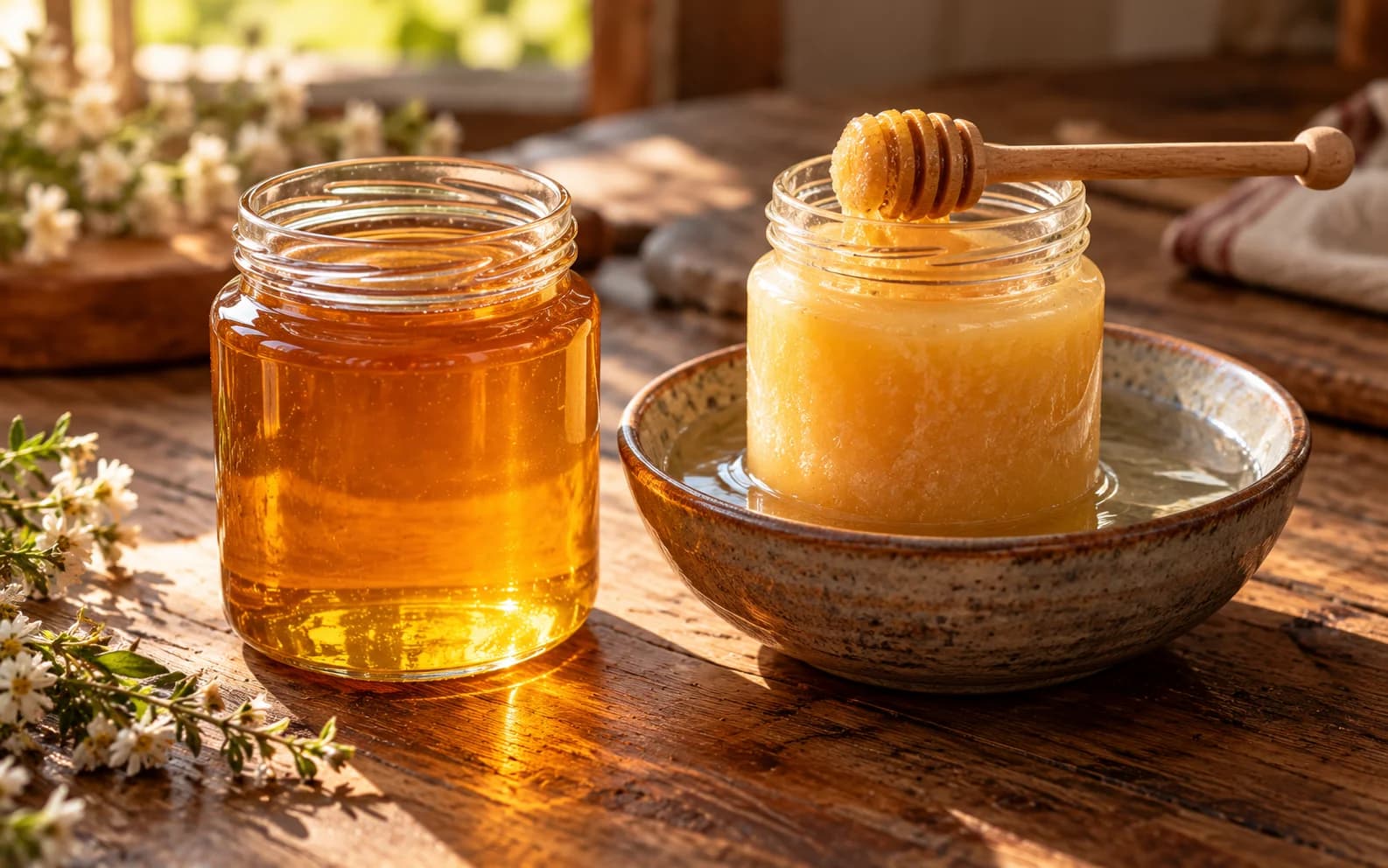
Honey is one of those foods everyone thinks they understand until a jar turns solid in the cupboard. Then come the questions. Has it gone bad? Was it fake all along? Should it go in the microwave? Here's what's actually going on.
What "raw" means
Most honey on supermarket shelves has been heated and finely filtered. That keeps it runny and crystal clear for a long time, which looks good on a shelf. Raw honey has only been strained to remove bits of wax and bee parts. It hasn't been heated beyond what the hive itself would reach.
The difference is mostly in taste and texture. Raw honey tastes more of the flowers the bees visited, and it crystallises sooner.
Why honey crystallises
Honey is mostly two sugars: glucose and fructose. Glucose doesn't stay dissolved for long, so over time it forms crystals, and the honey turns cloudy, then thick, then solid.
How quickly this happens depends on the flowers:
- Honey with more glucose (mustard, for example) can set within weeks.
- Honey with more fructose (acacia is the classic example) can stay runny for a year or more.
- Cool temperatures speed it up. Honey sets fastest at around 10 to 15°C.
Crystallised honey isn't spoiled. It's the same honey in a different form. Many people prefer it, because it spreads on toast without dripping.
How to make it runny again
- Stand the jar in a bowl of warm water. Hand-hot, around 40°C, not boiling.
- Leave it for twenty to thirty minutes, stirring now and then once it starts to soften.
- Replace the warm water if it cools.
Don't microwave it, and don't boil it. Strong heat changes the taste and destroys the delicate flavours that make raw honey worth buying. If you heat it once, it's honey. If you keep heating it, it's just syrup.
Home purity tests: what they actually show
You'll find a lot of tests online. Most don't prove much.
Test | What people say | What's actually true |
|---|---|---|
Drop honey in water: pure honey sinks | Fake honey dissolves | Thick syrups sink too. It only tells you it's thick |
Thumb test: pure honey stays put | Fake honey runs | Depends on temperature and moisture, not purity |
Set it alight with a matchstick | Pure honey burns | Unreliable, and a good way to make a mess |
It crystallises, so it's pure | Fake honey never sets | Many real honeys stay runny for months, and some syrups do set |
The only way to know for sure is a laboratory test, which checks things like sugar content, moisture and whether foreign sugars have been added. A good seller should be able to tell you whether their honey has been tested.
What to look for when you buy
- "Raw" or "unprocessed" on the label, and a seller who can tell you where it came from.
- A named flower source, like acacia, wild flower or mustard. Honey from one source tastes distinct.
- Cloudiness or crystals aren't a bad sign. If anything, they suggest it hasn't been over-processed.
One important caution
Never give honey to a baby under one year old, raw or otherwise. It can carry spores that are harmless to adults but dangerous to infants.
Using raw honey well
Stir it into warm, not hot, drinks. Drizzle it over yoghurt, porridge or fruit. If you add it to [kesar doodh](/blog/kesar-doodh-recipe), let the milk cool a little first. When our raw acacia honey is in stock, you'll find it in the [honey category](/categories/honey).