
Dried Apricots: Why Some Are Bright Orange and Some Are Brown
The colour of a dried apricot says more about how it was dried than where it grew. Sulphured, unsulphured and whole apricots with the stone, and how to use each.
NutsAndCrafts
17 October 20263 min read
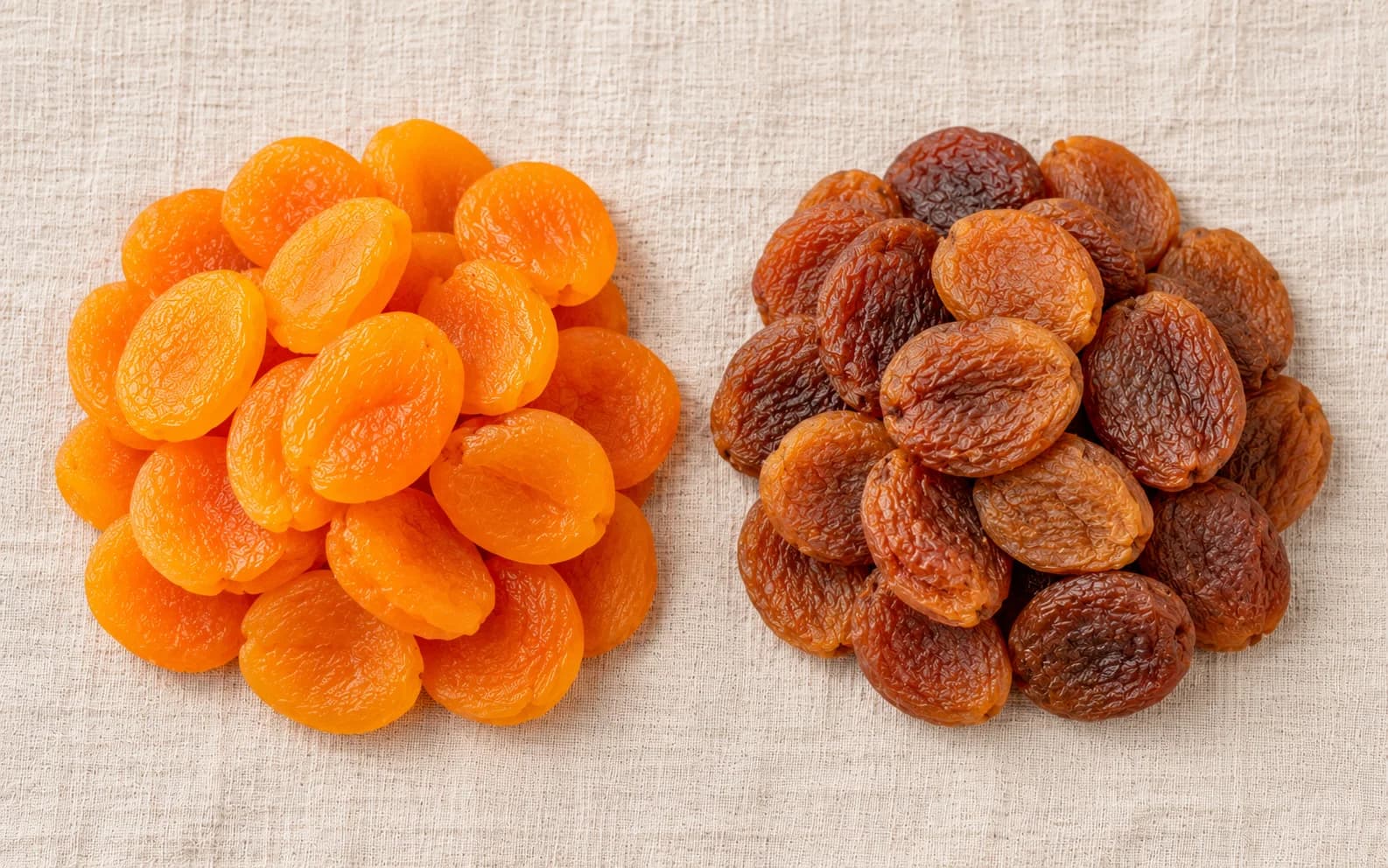
Put two bags of dried apricots side by side and they can look like different fruits. One is glossy and bright orange. The other is wrinkled, brown and a little dull. Most people assume the bright one is fresher or better. Usually, it's just been treated differently.
Where the colour comes from
Fresh apricots are orange. As they dry, they naturally darken to a deep brown, the same way a cut apple browns on the counter. To stop that, many producers expose the fruit to sulphur dioxide before drying it. The sulphur keeps the bright colour and helps the fruit stay soft.
So:
Sulphured | Unsulphured | |
|---|---|---|
Colour | Bright orange | Brown to dark amber |
Texture | Soft, plump | Chewier, sometimes firmer |
Taste | Tangy, bright | Deeper, more like caramel or toffee |
Label | Should mention sulphur dioxide or a preservative | Often called "natural" or "sun-dried" |
Neither is unsafe for most people. Some people are sensitive to sulphites, though, and they should look for unsulphured fruit. The ingredients list will tell you which you have.
Apricots with the stone
In the hills of Kashmir, Ladakh and the regions around them, apricots are often dried whole, with the stone still inside. They come out pale, hard and wrinkled, and they look nothing like the soft orange halves in a supermarket.
These need soaking. Leave them in water overnight and they plump up, turn soft, and release a sweet, slightly perfumed syrup. This is the apricot that goes into khubani ka meetha, the Hyderabadi dessert, where the soaked fruit is cooked down with sugar and the water it soaked in.
About the kernel inside. Crack the stone and there's a small almond-like kernel. Some are sweet. Some are bitter, and bitter kernels contain a compound that the body can turn into cyanide. Don't eat bitter apricot kernels, and don't eat more than a couple of the sweet ones. If you're not sure which you have, leave them.
How to use dried apricots
- As they are, as a snack. Two or three go well with a handful of nuts.
- Chopped into rice, especially in sweet or festive pulav. They're lovely in [modur pulav](/blog/modur-pulav-kashmiri-sweet-saffron-rice).
- Stewed. Simmer soaked apricots with a little sugar and cardamom until soft. Serve warm with cream or cold with yoghurt.
- In baking, chopped into cakes and muffins.
- With meat. Apricots and lamb is an old pairing across Central Asia and the Middle East.
Storing them
Keep dried apricots in an airtight container in a cool, dark cupboard. They last for months. In hot, humid weather, move them to the fridge. If they harden over time, a short soak in warm water softens them again.
Which ones we sell
We sell two kinds. Our [red apricots](/products/red-apricots) are the softer, deeper-coloured kind for snacking and cooking. Our [white apricots](/products/white-apricots-jardalu) are the pale kind for soaking and slow cooking. Check each product's page for exactly how it was dried.